''Even without major reforms, with a business as usual scenario, and with current inflation trends, we should be clocking around 11 to 12 per cent nominal growth.' 'That is not happening and is a source of worry,' Rathin Roy tells Arup Roychoudhury.

The Swadeshi Jagaran Manch has pointed out that these firms pose a threat to domestic manufacturing and retailing as they do not pay relevant taxes such as GST, giving them a huge edge over local players.

The two governments have already set a target of increasing bilateral trade in goods and services to $500 billion.
'The macro-economic stresses -- high interest rates, rupee depreciation and capital flows -- have receded now.' 'Interest rates have come down, inflation is down and the rupee has bounced back.' 'If oil prices continue at this level, there will be no vulnerability.' 'Growth is a different story.'

'Who sent Masood Azhar back to Pakistan? Who bowed down to terror and released him? Not the Congress, but it was the BJP government'
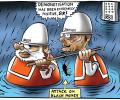
'Too much energy these three years has been invested in turning the party into an election-winning machine.' 'To recover its mojo, the Modi government needs a more impressive set of economic figures to flaunt,' says Shekhar Gupta.

The Biden administration should expect continuity in Iran's policies under Raisi. This may not necessarily mean that strengthening of ties with the West will be Raisi's top priority, observes Ambassador M K Bhadrakumar.
Talking corporate heads are a barometer of the business community's engagement with the economy. If they have nothing to say now there should be cause for concern.

The shift was sudden, quite unlike Shukla's departure from North Block, which had been anticipated for some months even before Singh''s first Budget.

Earnings growth is expected to accelerate as lingering toxic effects of note ban ease off and GST settles down. However, stock valuations are high and that means market is also overdue for correction, says Devangshu Datta.
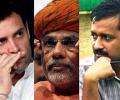
Rahul Gandhi thinks his imaginary Congress is the silver bullet; Narendra Modi thinks he himself is the silver bullet; Arvind Kejriwal seems to think that neighbourhood councils are a silver bullet. But none of them is right, says Mihir S Sharma.
Clamping down on the delays in repatriating foreign exchange earnings, the Reserve Bank of India (RBI) has tightened norms for special economic zones (SEZs), asking them to realise and bring back full value of goods and services to India within a year from the date of export.
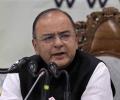
Besides advancing the presentation of the Budget to perhaps the first week of January, , there are four new initiatives that could be rolled out from the next Budget, says A K Bhattacharya.

'This country today is demonstrating to the world the true meaning of federalism, the true meaning of working in partnership between the central government and the state governments.'

US India Business Council president Ron Somers wrote in an article that India is not only the world's third-largest economy but is also a stabilising force in a region known to be a 'tough neighbourhood'.

'India missed the software products revolution (and now is in danger of missing the platform revolution), complacent that we are the software experts of the world based on IT services prowess,' points out Rajeev Srinivasan.

Addressing a joint session of Parliament on Monday, President Pranab Mukhejee spelled out the Narendra Modi's government's agenda. Here are the highlights of his speech,

10 central trade unions have called a nationwide shutdown against 'anti-worker policies' of the central government. Apart from being successful in Bengal, Kerala and NE states, the bandh has also got support from Cong leader Rahul Gandhi and Shiv Sena in Maharashtra.
CAF Bill's fate to be decided on Monday

Arun Jaitley is on a 10-day trip to the US.

The Nifty has gained 2.6% so far this week, while the Sensex has climbed 2.85%

A summary of sports events and sports persons, who made news on Sunday

Opposition party is unlikely to block Bills for GST, insurance and e-auction of coal mines.

Modi has been relentless in building his brand regardless of banks having a problem of fraudulent and unauthorised transactions with his companies.
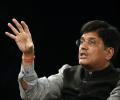
'Challenges will come but we will stay the course. No big step can be taken if one is afraid of criticism. We will not flinch from criticism,' says Railways Minister Piyush Goyal.

Consensus building is likely to be the biggest casualty.

The bill was taken up for consideration in the Lok Sabha after the Speaker rejected Opposition demands to refer the key reform measure to a parliamentary Standing Committee.

'Modi should not feel shy of proclaiming as the meaning of secularism regard for all religions in proportion to their numbers in tune with the spirit of democracy and adopting it as State policy,' says B S Raghavan.

'I had expected them to fight this election on the issue of development, but they are not doing that.' 'Now they have decided to belittle Gujarat's development.'

'To become more Indianised we had to be more colourful,' Rahil Ansari, Audi's India head, tells Ajay Modi.

'We are looking at the Budget with the hope that it will address all issues even at the cost of exceeding the fiscal deficit target.'

Meet Jasmeet Singh Sandhu who ranked third in the Union Public Service Commission exam this year.

'The conception of Make-in-India, Skill India, Smart Cities, Digital India, Beti Bachao, Beti Padao and so on show a visionary breadth of mind, and Modi is almost the first political leader in India to put them into effect with single-minded zeal,' notes B S Raghavan, the former civil servant.

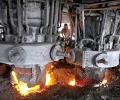
The non-oil, non-finance sector of the economy is under severe stress.

Budget speeches have been replete with incomprehensible and even hilarious statements, says Rathin Roy.

Here's the full text of President Ram Nath Kovind's customary address to the joining sitting of Parliament on the first day of the budget session.
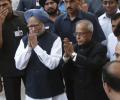
Manmohan Singh, reveals the former President, was keen that either P Chidambaram or Montek Singh Ahluwalia be the finance minister.
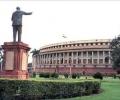
From 1952 to 1967, each of the three Lok Sabhas sat for an average of 600 days and more than 3,700 hours. In comparison, the 15th Lok Sabha -- from 2009 till 2013 -- has met for just 345 days and 1,331 hours, says Shreya Singh

'Growth is predicated on the misery of large sections of people.' 'Maybe Hindutva will be used to suppress any such unrest.'
